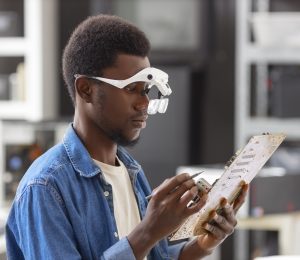
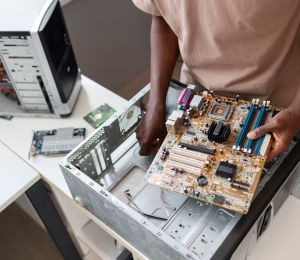
Our program provides a comprehensive blend of theoretical learning, hands-on experience, and exposure to cutting-edge technologies. Students are prepared to address real-world challenges in computing and contribute to the technological advancements shaping our future.
Mission
To provide a robust education in computer engineering, fostering innovation, technical expertise, and problem-solving skills to meet the demands of an ever-evolving digital world.
Vision
To be a leading institution in computer engineering education and research, producing graduates who are innovators, leaders, and contributors to global technological advancements.
Program Highlights
- Integrated Curriculum: Courses encompass key areas such as computer architecture, operating systems, algorithms, programming, and data structures.
- Hands-On Learning: Students gain practical experience in programming, system design, hardware interfacing, and software development through state-of-the-art labs.
- Focus on Emerging Technologies: Special emphasis on AI, machine learning, cybersecurity, cloud computing, and blockchain technologies.
- Capstone Projects: Final-year projects allow students to design and implement innovative solutions to real-world problems.
- Collaborations and Internships: Industry partnerships provide exposure to contemporary tools and practices through internships and guest lectures.
Why Choose Computer Engineering at SPIHEMAT?
- Expert Faculty: Learn from experienced educators and researchers passionate about student success.
- Modern Infrastructure: Access advanced computing labs equipped with the latest software and hardware tools.
- Innovative Learning: Engage in research and development projects that address current and future technological needs.
- Industry Readiness: Gain skills and certifications aligned with global industry standards.
- Focus on Sustainability: Incorporate sustainable practices in technology design and development.
Career Opportunities in Computer Engineering
Graduates of the Department of Computer Engineering are well-positioned to excel in a variety of roles across industries such as software development, hardware design, IT, and research. Potential career paths include:
- Software Engineer
- Hardware Engineer
- Network Engineer
- Cybersecurity Analyst
- Machine Learning Engineer
- Data Scientist
- IoT Developer
- Embedded Systems Engineer
Our graduates are equipped to work in multinational corporations, technology startups, research labs, and government agencies.
Research and Innovation
The department actively fosters research and innovation to advance the field of computer engineering. Areas of research include:
- Artificial Intelligence and Machine Learning
- Cybersecurity and Data Privacy
- High-Performance Computing
- Internet of Things (IoT) and Embedded Systems
- Blockchain and Cryptography
Students and faculty collaborate to publish groundbreaking work and develop solutions to contemporary technological challenges.
Our Commitment
The Department of Computer Engineering at SPIHEMAT is committed to nurturing the next generation of computer engineers who will lead technological innovation and development. With a focus on academic excellence, research, and industry relevance, we prepare our students to thrive in a rapidly changing technological landscape and make a meaningful impact on society.